System Capabilities
Capacity & Efficiency
200 Litres (approx. 250kg) fixed capacity with an impressive volume reduction of 80% through the composting process.
Off-The-Grid System
Requires no electricity, additives, or manual turning to function.
Odor-free Composting
The Aerobin lung enables aerobic composting, keeping the process odorless without manual biomass turning.
All-year Round / Insulated
Thermal insulated panels reduce heat loss, allowing hot composting all-year round in any climate.
Dual Output
Produces nutrient-rich liquid fertilizer from 4 weeks and solid compost from 12 weeks onwards.
Moisture Recirculation
Insulated panels facilitate internal condensation, removing the need for adding water manually.
Compact & Elegant Design
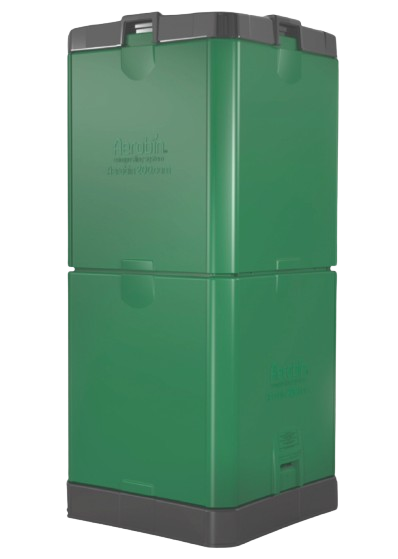
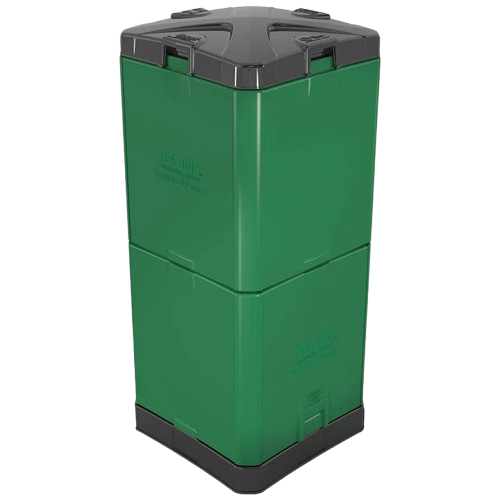
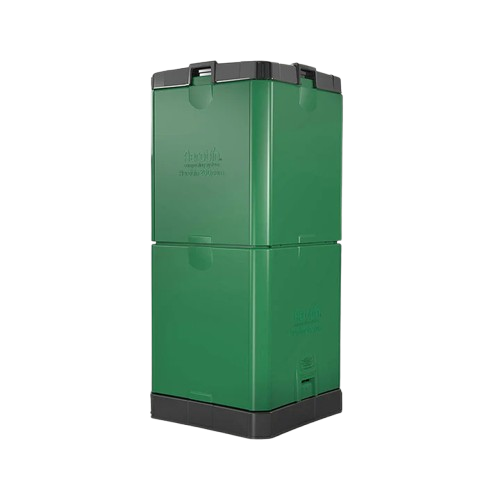
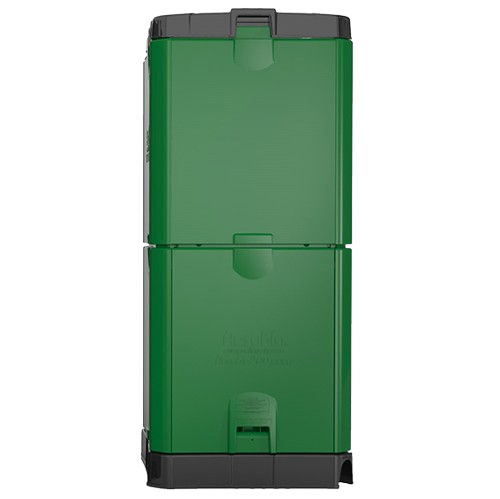
Small footprint of 510mm (W) x 510mm (D) x 1200mm (H), designed for smaller households.
Convenient Access Doors
Two access doors at the bottom provide easy, ergonomic harvesting of the finished solid compost.
Zero Maintenance Costs
The system is built to be durable and self-sustaining, resulting in zero ongoing maintenance costs.
BPA Free
Made from 100% BPA-free materials to ensure no microplastics contaminate your organic compost.